Businesses are investing heavily in AI, but adding smarter technology does not automatically create a smarter operation.
If information still has to be copied between systems, approvals are still chased manually, documents live in different places, and employees have to remember what happens next, AI may improve an individual task while the larger workflow remains fragmented.
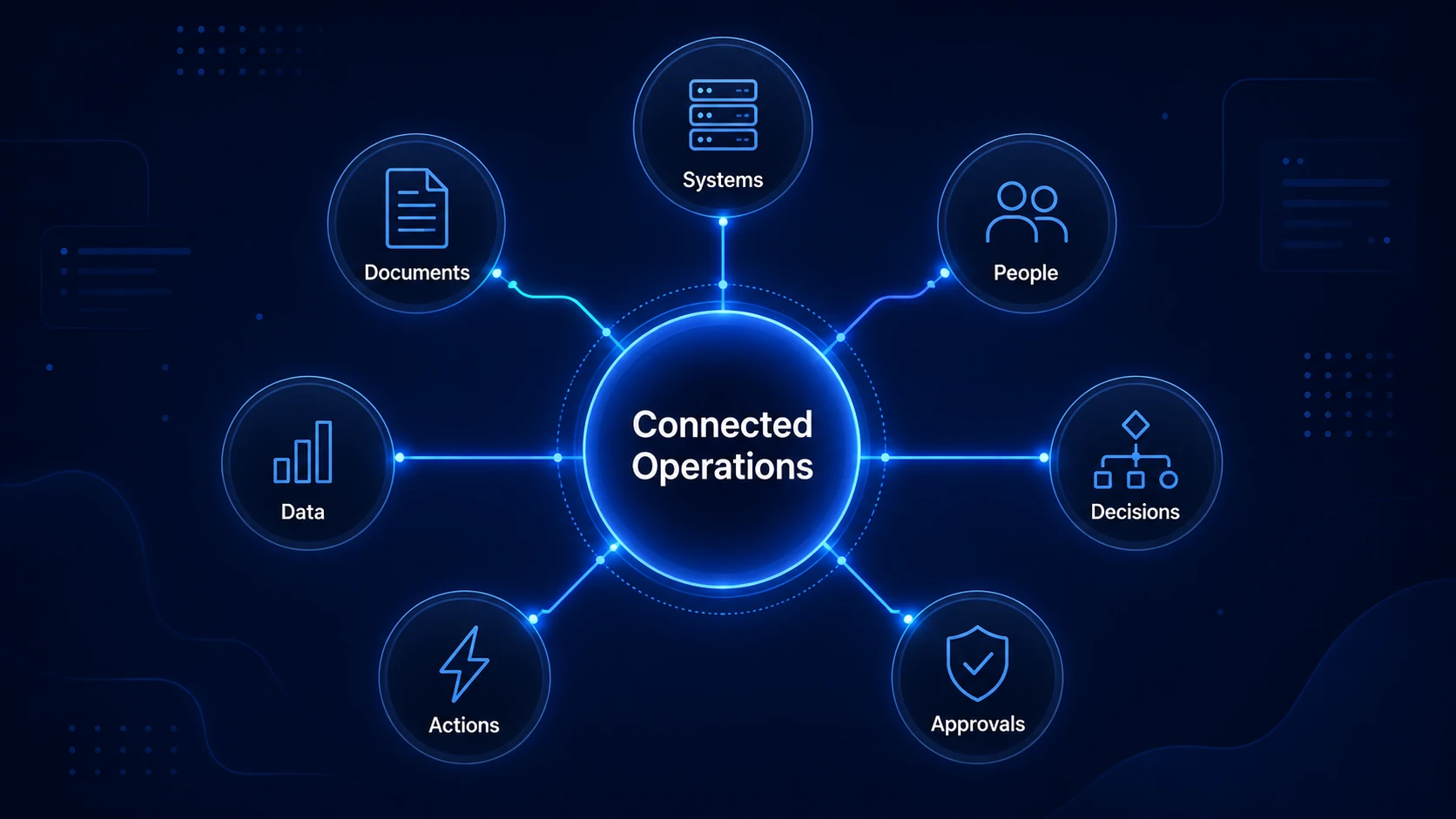
That is often where the real bottleneck lives: between the systems, people, documents, and decisions.
Before asking, “What else can we automate?” it may be more useful to ask:
Where does work slow down between one action and the next?
Sometimes the answer is not another tool. It is better orchestration — connecting the systems already doing useful work so information can move, exceptions can surface, and people can focus their attention where human judgment actually matters.
That is where technology begins to translate into execution.